
By Serena Lapointe
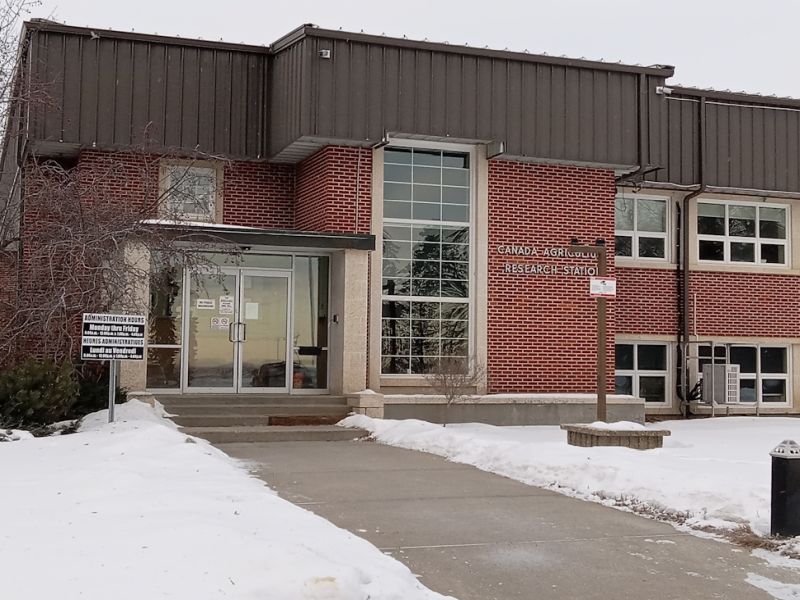
A research center in central Alberta, which has been in operation since the early 1900s, is
slated to close within the next twelve months due to a government decision to reduce its
services. The Lacombe Research and Development Centre opened in 1907 and has led in
many agriculturally based areas over the last 119 years. The closure will be felt across Western
Canada, including in Woodlands County.
The facility has been a leader in livestock and meat production research, crop sciences, weed
science, plant pathology and integrated crop protection. Over the decades, it also generated
significant continuous data on food security, climate resilience and innovation. In 1957, the
facility even developed national meat grading systems, focusing on sustainable livestock
production and meat quality.
As was explained at the Woodlands County Council meeting on March 12, the loss will not be
small potatoes. “Many of the findings that occur at this particular facility are mixed farming
systems, which are conducive to Woodlands County, and producers that you’ll typically find
here,” explained Joan Slootweg, Community Planning Services Manager. She said that the
research helps inform producers indirectly through various programs, groups, organizations,
and conferences. Without the facility providing the data, the information sharing stops.
Although other research facilities will remain in Alberta, the data may not be as helpful for folks
living centrally. “There will still be two facilities in Alberta, which is Beaverlodge and Lethbridge;
however, the central area would kind of be left out of that. And there are differences, of course,
in your climates and things that carry different farming practices. So, that information wouldn’t
be coming forth necessarily without that facility.”
So, why the closure? Agriculture and Agri-Food Canada (AAFC) wishes to reduce the size of its
public service, all part of a national workforce reduction effort over the next year. In Lacombe
alone, the decision will impact 112 staff members and stifle ongoing research projects that
benefit area producers, including those residing in Woodlands County.
Even if the projects move to a different facility, the decades of trials, infrastructure and expertise
may not be easily recreated elsewhere, potentially creating gaps in data collection and affecting
the ultimate goal of the facility in the first place, which is providing accurate information, specific
to an area of the province.
In response to the closure, Lacombe County has sent out a request for letters from concerned
Municipal Districts and Counties wishing to see the decision reversed, asking that letters be
addressed to the Government of Canada, Agriculture and Agri-Food Canada. And that’s how
the topic landed on the desk at Woodlands County.
The letter from Lacombe County states that the decision to close the facility will be a
“weakening of Canada’s independent agricultural research base at a time of heightened global
uncertainty,” adding that it will terminate or relocate “long-term scientific trials that cannot be
replicated without irreparable loss of data and infrastructure value.”
The letter also pointed to the effect the closure will have on students interested in agriculture
careers due to the reduction in “hands-on student placements, mentorship, and early career
opportunities that are essential for Canada’s agri-food workforce.” It also stated that the loss
would undermine the “research cluster” that connects “academia, industry, and the public sector
innovation in Central Alberta.”
Woodlands County Councillor Peter Kuelken said he supported joining the call for action and
getting a letter sent to the federal government. “It’s interesting that the Federal Government is
now choosing to download some of the things onto the provinces. The problem we have in
agriculture is that even the province has neglected the extension work that is really important for
agriculture, in general. A lot of those services have been taken up by organizations like Grow
and Farming Forward, and the problem with it is that it’s deluded.”
Kuelken explained that agriculture is changing, making the research all the more important for
farmers. “Agriculture is evolving quite interestingly into a different space where a lot of that
research is necessary, and yet the political powers who have, over a long period of time,
distanced themselves virtually culturally from agriculture, are not seeing the value in that as
much as the agricultural community does. I am completely in support of trying to figure out how
we lobby the federal government not to reduce those services because they are important.”
Reeve Dave Kusch agreed. “Overall, in Canada, we have some of the highest standards in
agriculture, and the testing and research that’s done in the background helps ensure that what
we have is top tier and viable.” He agreed that sending the letter and joining the fight alongside
Lacombe was a good idea.
Councillor Kuelken agreed with the Reeve’s comment about Canada’s high standards. “You’re
one hundred percent right. What we’re starting to see now in agriculture is that it’s a top-down
enforcement issue on food safety and other things which are absolutely not relevant. As you
delude the bottom end part of it, the top end starts to do some of the things that become
counterproductive.”
Woodlands County Council voted in favour of sending a letter to The Honourable Heath
MacDonald, Minister of Agriculture and Agri-Food, urging him to reverse the decision to close
the Lacombe facility. Three research facilities and four satellite research farms are also
expected to close, leaving seventeen centres open. Well over 650 jobs are expected to be lost
across Canada.



More Stories
Impactful dollars granted to four community groups
River spurs to see needed work following high river event three years ago
Is your fire pit permit older than 2025? Then you need to get a new one