By Serena Lapointe
An energy-heavy landmark agreement between the Province of Alberta and the federal
government, signed in late November, was implemented with a detailed agreement on
May 15. The Memorandum of Understanding (MOU) outlines cooperation between the
two governments for things like natural resource expansion, environmental regulation,
and infrastructure development, including the regulatory framework for a West Coast
pipeline to prioritize access to Asian markets.
“Construction of one or more private sector constructed and financed pipelines, with
Indigenous Peoples co-ownership and economic benefits, with at least one million
barrels a day of low-emission Alberta bitumen, with a route that increases export access
to Asian markets as a priority. This application for this pipeline project will be ready to
submit to the Major Projects Office on or before July 1, 2026. It is agreed this new
pipeline would be in addition to the expansion of the Trans Mountain pipeline for an
additional 300,000 to 400,000 barrels per day destined for Asian markets,” reads the
MOU. It also clarifies that Alberta must work with B.C to ensure that “British Columbians
share substantial economic and financial benefits of the proposed pipeline.”
The MOU also details how Alberta will become a front runner for low carbon intensity.
Under projects, it includes the construction and financing of the “world’s largest carbon
capture, utilization, and storage project for the purpose of making Alberta oil among the
lowest carbon intensity produced barrels of oil in the world.”
The five-page MOU, found on open.alberta.ca, also touches on nuclear power
generation and states that the federal government will work with the province to design
a strategy, set to be finalized on or before January 1, 2027, as well as emissions
expectations, such as a methane equivalency agreement with a 2035 target date and a
75 percent reduction target relative to 2014 emissions levels.
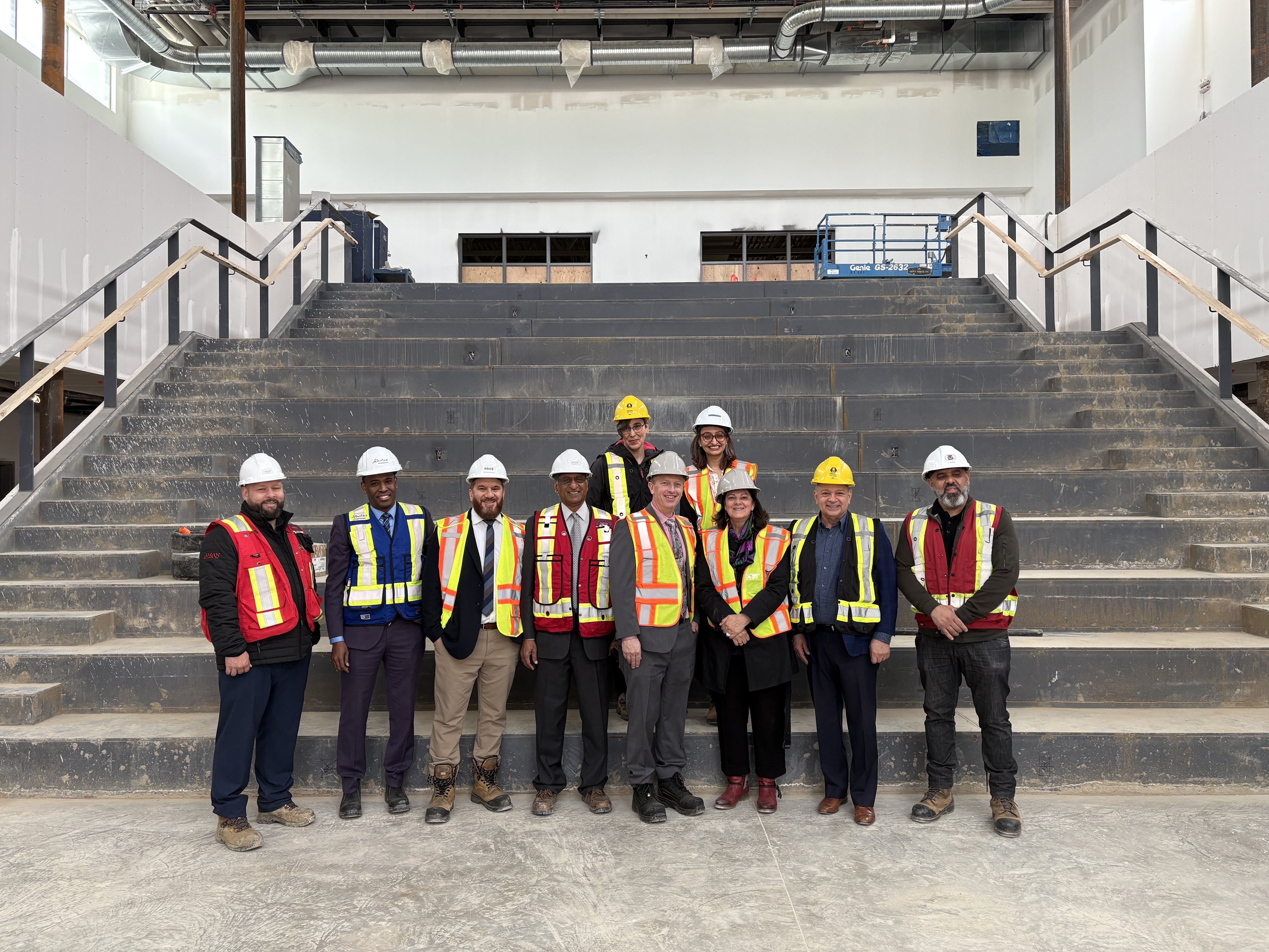
West Yellowhead MLA Martin Long, Minister of Infrastructure, said he has noticed a
difference in the working relationship with his federal counterparts. “We have seen a
drastic shift in tone from the federal government, and I believe that’s truly what has led
to the MOU being signed. In my own personal interactions with my federal counterparts,
there’s more discussion around collaboration and working with provinces. I think that
many could very bluntly say that for about a decade, we didn’t have that tone being set
at the federal stage.”
MLA Long said what he’s heard from Prime Minister Mark Carney in recent months is
that it’s clear; Canada’s success is reliant on Alberta’s success. “Our government has
been intent on getting another pipeline built to help our oil and gas economy. We’ve
shared for many, many years that we need to get access to other markets instead of
being so heavily reliant on the American market. So really, this MOU is about creating
certainty in market success, because we know that that’s what will drive jobs and
investment. It’s really a road map to reduce the uncertainty and strengthen our
competitiveness for our energy sector, which will include a focus on growing exports,
and yes, lowering emissions, because we know that that’s not just a priority for
governments and the energy sector, but for families as well,” explained MLA Long.
With some big, impactful changes in the MOU, MLA Long said he expects to see
movement on a pipeline as early as next fall. “The MOU already removed the cap on oil
and gas production and removed any net-zero power regulations, as well as rolled back
a major hike in carbon pricing that Ottawa was going to impose. It lowered that price
substantially.” He said the news was encouraging, finally. “I would say that the Trudeau-
era federal government wasn’t overly friendly to the voice of many provinces, let alone
Alberta.”
He said that, although each province has unique concerns, there are some significant
issues that have affected most, if not all, of them. “One example I’ve highlighted before
was the immigration policy that was put into force by the Trudeau government. Every
single province was saying the same thing: that we couldn’t sustain the numbers at the
rate they were bringing them in, and Trudeau’s policy trumped the voices of provincial
leaders around the country. Every single province is dealing with the same things that
Alberta is today, which is massively expanding infrastructure to meet the needs that
were thrust upon them,” said MLA Long.
The importance of the MOU was made clear with its opening sentence, which called it a
“pivotal global moment,” encouraging collaboration among all involved to get things in
motion. “Canada and Alberta, working closely with Indigenous Peoples and industry,
must work together cooperatively, and within their respective jurisdictions, to foster the
conditions necessary for infrastructure, including pipelines, rail, power generation, a
strong and integrated transmission grid, ports and other means that will unlock and
grow natural resource production and transportation in Western Canada,” reads the
document’s opening paragraph.
MLA Long said seeing things come together as they have should hopefully give
optimism to Albertans moving forward. “It is such a huge shift, and for me, as a
representative and as a resident, I have optimism that we have a path forward for
families in Alberta to succeed should this current tone continue as it is today.”


More Stories
Hilltop students get hands-on look at Alberta’s forestry sector
Blue Ridge Family Fun Day brings an afternoon of fun to the community
Helping local cancer patients, one car show at a time