
By Haylee Winger
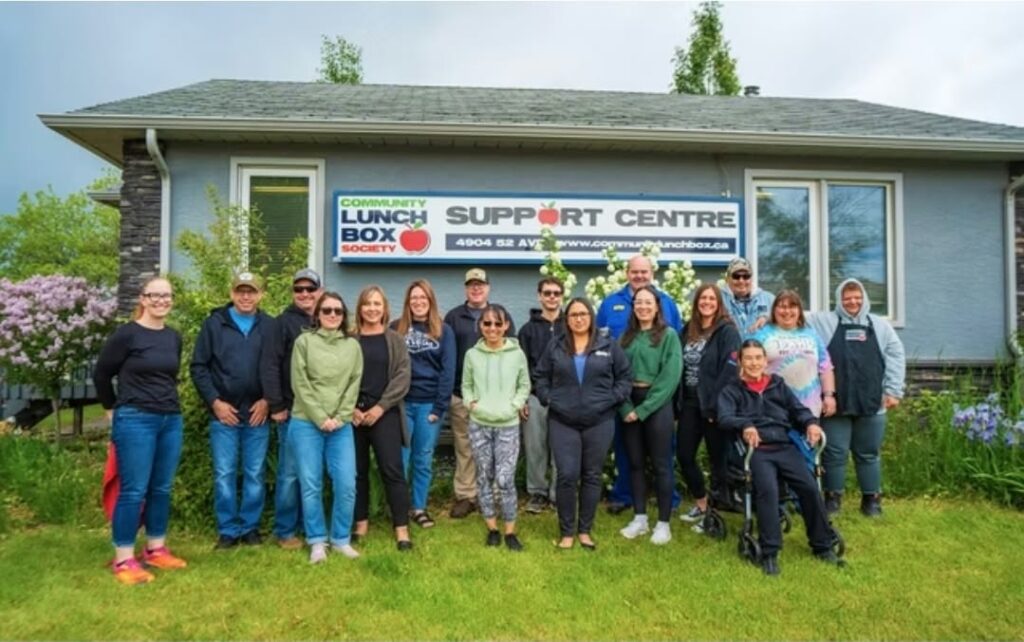
The Community Lunch Box Society supports more than 2,500 children and youth across Whitecourt and area, providing access to food through programs at 13 locations.
Founder Tara Baker said rising food costs and growing demand are putting added pressure on the organization as it works to meet the needs of local children and youth.
“If it were simply about rising prices, that would be one challenge to manage,” Baker said. “But when the cost of providing food and the amount of food needed rise at the same time, it creates additional logistical challenges for some of our programs.”
The Community Lunch Box began in 2004 with the goal of ensuring every child had an equal opportunity to learn on a full stomach.
More than two decades later, the organization has grown beyond its original Lunch Box Program. It now operates a Bottle Recycling Program, provides part-time employment opportunities and offers inclusive volunteer opportunities for people of all abilities.
Its food programs are available in local schools across both school divisions, as well as at the library and through programs for younger children and after-school activities.
Baker said the level of support a child needs can look very different from one student to the next.
Some children may arrive at school with a full lunch but grab an orange after gym class. Another student might pick up a granola bar before an exam or have a yogurt after recess. For others, the program can provide breakfast, lunch and snacks.
Making food available in a welcoming way, without singling children out, is an important part of the program.
“Food insecurity isn’t always visible, and we don’t always know what a child or family may be going through,” Baker said. “Our goal isn’t to decide who needs food more. Our goal is to make nutritious food accessible to kids in a welcoming environment.”
Sometimes that means providing a full lunch, while other times it may simply be an apple or a snack during the day.
“Either way, it’s one less thing a child has to worry about during their day,” she said.
As demand grows, the organization must also consider how it can continue meeting the needs of local children and youth in the years ahead.
Baker said the team has worked to prepare for challenges, but the combination of higher costs and increased demand has required important decisions to protect the long-term sustainability of its programs.
Funding remains one of those challenges.
Baker said there is a misconception that the Community Lunch Box receives guaranteed ongoing funding. While the organization has long-term supporters, much of its funding comes from annual grant applications, fundraising, donations and its Bottle Recycling Program.
That can make long-term planning difficult because the need for food continues regardless of whether a grant application is successful or a fundraiser meets its goal.
Keeping the programs running also requires considerable planning behind the scenes.
In a typical week, the Community Lunch Box coordinates two delivery days, usually on Mondays and Wednesdays, with adjustments made during shorter school weeks. Food must be ordered, delivery routes organized and communication maintained with staff at each of the 13 locations.
Community support also plays a major role in keeping the programs running.
“Our community partnerships are the foundation of the Community Lunch Box,” Baker said.
Businesses and residents support the organization in different ways, including donating food or money, collecting bottles, organizing fundraisers and giving employees time to volunteer.
Baker said support does not always have to come in the form of money. Seeing Community Lunch Box stickers displayed in local businesses or thank-you cards posted where others can see them also means a great deal to the team.
“The Community Lunch Box may coordinate the programs, but it is our community that makes them possible,” she said.
Financial support for the food security and nutrition programs is currently the organization’s greatest need. The Community Lunch Box shops at local grocery stores and can use financial donations and grocery gift cards of any amount to purchase food.
There are also other practical ways to help. The organization needs garbage bags and disposable gloves for volunteers at the Bottle Recycling Centre, while gas cards help keep its collection and delivery truck on the road.
The society is also hoping to invest in a more industrial-grade shredding machine for its shredding room, which provides volunteer opportunities for some members of the team.
The Bottle Recycling Program has become another important part of the organization’s work.
Bottle donations help support food programs for children and youth while also providing meaningful part-time employment. After a busy summer, the organization hopes to keep its crew working throughout the winter.
Baker said crew members take pride in knowing their work helps local children while allowing them to earn their own paycheques.
Creating opportunities for people who may face barriers to traditional employment is something the organization takes seriously.
Baker said there are people in the community with skills, strengths and a willingness to contribute who may simply need someone willing to give them an opportunity.
The same approach carries over into the organization’s volunteer work. The Community Lunch Box offers inclusive opportunities for people of different abilities to take part and contribute to their community.
“Whether it’s access to nutritious food, meaningful employment or a place to volunteer, sometimes the greatest thing we can offer someone is simply the opportunity to belong,” Baker said.
The organization also wants to help remove the stigma that can come with needing support.
Baker said food insecurity is not always something people can see from the outside, and no one can know everything another person or family may be dealing with.
“We want to help normalize the conversation around asking for and receiving support,” she said. “Needing a helping hand should never come with shame or judgment and offering one should be part of how we care for one another.”
The Community Lunch Box also takes on other initiatives when needs arise in the community. These have included a Back-to-School Supply Drive and Lunch & Learns aimed at bringing people together, building friendships and reducing isolation.
The organization is also looking for more opportunities to connect directly with residents. Its team welcomes visitors to its facility and can arrange tours or presentations for businesses, organizations and community groups interested in learning more about its work.
The Community Lunch Box is preparing for its annual Celebration Night on February 27, 2027, an evening focused on inclusion, connection and community.
After more than 20 years, Baker said some of the most rewarding reminders of the program’s impact come from children who received support years ago.
Some of those children have now grown up and returned as adults who give back to the community and share their own stories with the organization.
“We know asking for help isn’t easy, so when support is offered freely, without judgment or shame, it creates something lasting,” Baker said. “Children grow up remembering how their community made them feel, and we’re now seeing that kindness being passed along to others.”



More Stories
Town of Whitecourt selected as one of two Alberta municipalities to take part in pilot project
Jake’s Gift brings story of remembrance back to Whitecourt
Free cornhole program gives Whitecourt youth a place to play