
By Serena Lapointe
Following a presentation by Glenda Farnden, Senior Municipal Relations Liaison for STARS Air
Ambulance, in late January, Whitecourt Town Council considered the possibility of establishing
a helipad for STARS to utilize within the community, specifically at or near the current hospital.
The elected officials asked their administration to examine whether or not it was actually a
workable idea.
At the May 19 Policies and Priorities Meeting, Lee Hardman, Director of Community Safety,
and Peter Smyl, Town of Whitecourt CAO, provided the committee with information on the
current practices for STARS and the potential costs associated with a helipad project.
Two Alberta municipalities that have helipads at their hospitals are Valleyview and Innisfail. It is
worth noting that having one inside a rural municipality is not common. Innisfail has had its
facility since the late 1990s, but voluntarily closed it in 2020 because the helipad no longer met
Transport Canada’s regulations. After 29 months closed, it recently reopened with significant
upgrades.
Valleyview’s permanent helipad has been active for eleven years. The project was a collaboration
between the Town of Valleyview, the M.D of Greenview, and the Sturgeon Lake Cree Nation,
costing a reported $200,000 at the time. Today’s costs are significantly higher, as Hardman
explained, a helipad in Whitecourt would likely fall in the ballpark of $750,000 to one million
dollars, with a yearly operating cost of around $55,000.
Though the project has been successful in those two communities, there are others who have
tried for years without success to have a helipad installed, simply due to the regulatory process
that surrounds it. One such community is High Prairie. The conversation around a helipad began
in 2014, three years before their 228-million-dollar health complex was opened.
Current practice for STARS out of High Prairie is to use the airport, roughly seven kilometres
away from the hospital. When the new hospital opened in 2017, Transport Canada approved a
temporary landing site steps from the hospital, nearby in an open field. That allowance remained
for three years before it was shut down as it no longer met safety requirements and operational
specifications.
Six years later, and the community is still advocating for its helipad project because the logistics
of having an approved, dedicated helipad within a community are not for the faint of heart.
Transport Canada has numerous regulations that need to be met, including physical dimensions,
obstacle limitations, and visual/lighting aids. Helipads need to be properly designed and
engineered for surface and load, able to support a minimum of 14,000 pounds, have proper fire
protections, lighting, safety zones, and align with Alberta Health Services guidelines. Then there
are zoning requirements from government bodies and environmental impacts. And that’s just a
short list.
Another factor that comes into play is the distance from a municipality’s hospital to a situated
landing site, such as an airport, as well as any possible interferences with travel, like a railway.
For Whitecourt, the airport is roughly twelve kilometres away from the hospital, and although an
intersection with train tracks is near the access route, it doesn’t cross the direct path.
“The current practice is that a patient has to be stabilized before transport via helicopter,”
explained Hardman. “They can land on a variety of different terrains, but they do not land within
town. I am aware of a few instances in which they have landed in town, but it is not their
standard practice. The common practice is to go to the airport,” explained Hardman.
On whether to move forward with the project at this time, Hardman said the administration was
recommending against it. “It does not guarantee service availability.” He added that if the
committee wanted to look into it further, the next step would be to have a study done.
The committee asked if this were a conversation that could be pinned to future talks about the
hospital, to see if it’s something that could be added to the project when the hospital is finally
upgraded or replaced. It was also noted that an investment in a helipad before hospital upgrades
occur could potentially jeopardize the hospital’s advocacy efforts. “We don’t want to build a
helipad where it may be moved in the future, in regard to the design of a hospital,” added
Hardman.
CAO Smyl said conversations around a helipad at Whitecourt’s hospital go back twenty years.
He said there were concerns about the hill itself and the tree line, one of which is easier to deal
with than the other. “It would be something that we would like to incorporate into a
recommendation if they’re (the province) discussing the new hospital, to indicate that we’d still
like the helipad.”
It was questioned in the meeting if ambulances have any currently concerns getting to the
Whitecourt Airport, including through the gate. Chair Councillor Bill McAree said that
accessibility at the airport was better. He noted that ambulance drivers have access to the code
and can get through it quickly. The committee accepted the report as information and will not be
taking any steps forward at this time.
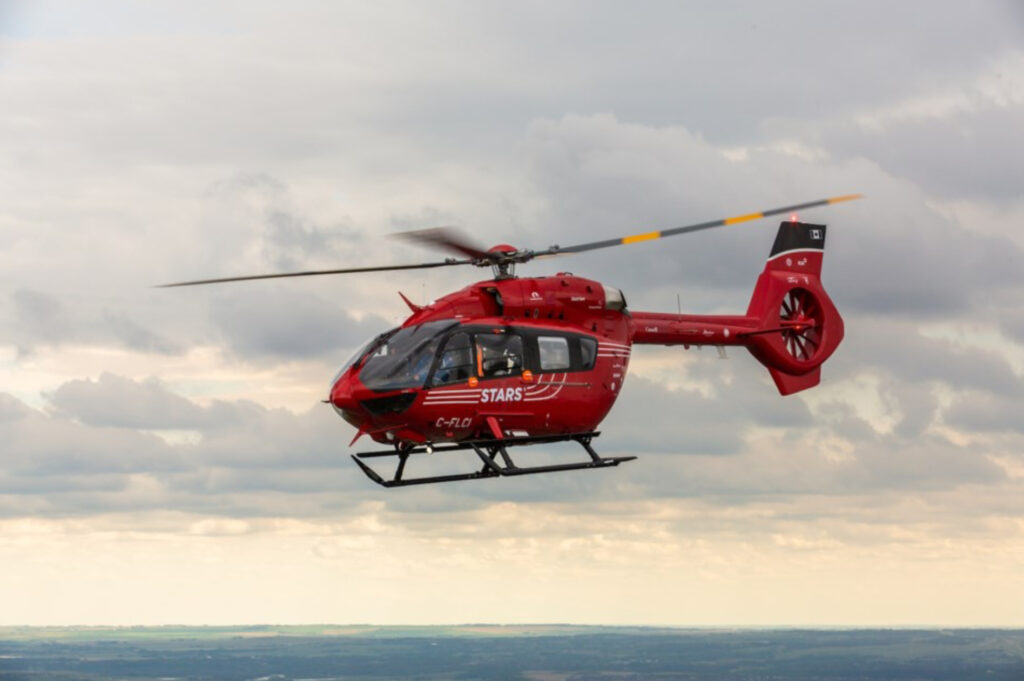
(STARS PHOTO)



More Stories
Town of Whitecourt selected as one of two Alberta municipalities to take part in pilot project
Jake’s Gift brings story of remembrance back to Whitecourt
Free cornhole program gives Whitecourt youth a place to play